

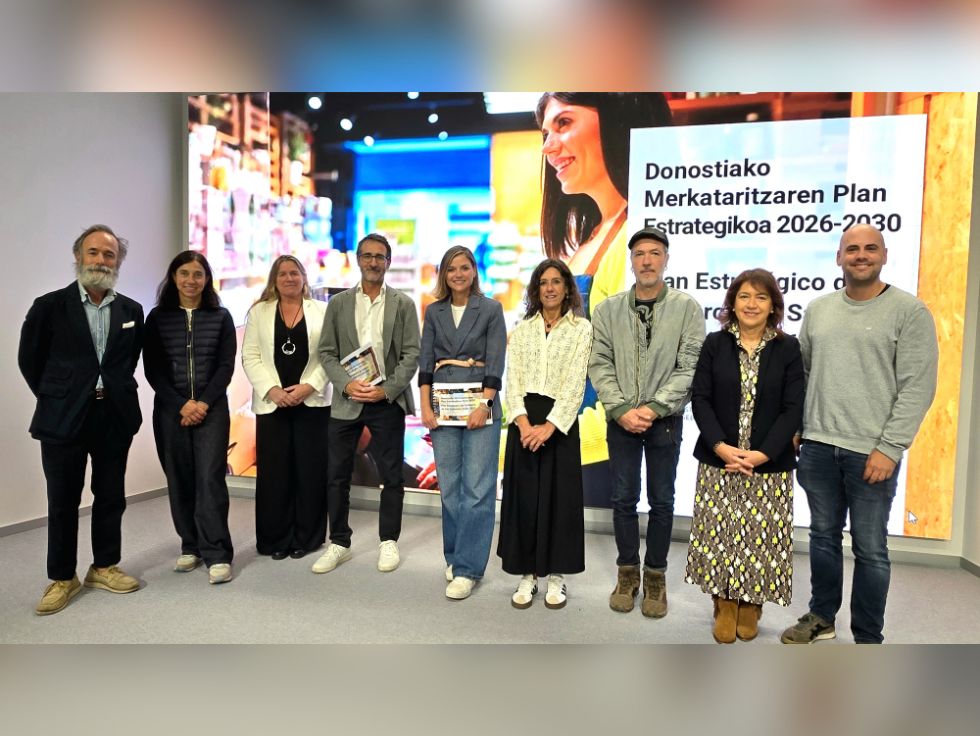
In a world where consumption habits and demographic dynamics are transforming at a dizzying speed, local commerce stands as a fundamental pillar of the identity and economy of cities. Aware of this reality and the challenges arising from it, Donostia has marked a turning point with the approval of its ambitious Strategic Commerce Plan 2026-2030. This initiative is not just a document; it is a statement of intent, a meticulously crafted roadmap to shield the competitiveness, innovation, and sustainability of its commercial fabric, guaranteeing its vitality in the coming decades. The creation process, led by Fomento de San Sebastián, has been an exercise in participatory democracy, involving all key stakeholders to build a shared and robust vision of the commercial future of the Gipuzkoan capital.
Challenges in a Constantly Evolving Market
Urban commerce, especially in cities with a strong identity like Donostia, is immersed in a process of profound change. According to recent data from the city barometer, trends are observed that demand a strategic and concerted response. New consumption habits, driven by digitalization and the search for personalized experiences, along with demographic changes, are redefining the commercial landscape. One of the most significant challenges is the evolution of the number of establishments and the urgent need to facilitate relleu generacional, ensuring that the knowledge and passion of merchants are not lost. Added to this is a progressive decline in consumption per person, a trend that affects both residents as well as visitors of the city, putting pressure on the viability of local businesses.
These factors underline the urgency of long-term planning that not only reacts to changes but anticipates and leads the transformation. The capacity for adaptation, continuous training, and the integration of new technologies become crucial. Precisely, in line with this vision, initiatives like that of Candelaria, which launches free training programs to introduce artificial intelligence into local businesses, illustrate the kind of responses that the commerce of the future needs to thrive.
The Three Major Lines of Action for Commercial Excellence
To address these challenges with a clear vision and concrete actions, the Strategic Commerce Plan 2026-2030 is structured around three major strategic lines, each with its respective Technical Commissions to guarantee its execution and monitoring:
- Promotion of an innovative and excellent commerce model: This line focuses on promoting commerce that is not only competitive but also distinguished by its quality, creativity, and capacity for adaptation. It includes support for digitalization, the promotion of new sales methods, and the valuation of local and proximity products. It seeks to foster an environment where emerging talent can find its place and where existing businesses can evolve.
- Sustainability and urban revitalization: Commerce cannot be understood without its environment. This line focuses on the integration of commerce with urban space, promoting sustainable practices, improving accessibility, and taking care of the streets and squares where commercial activity takes place. Revitalization includes the creation of events, themed routes, and the promotion of the shopping experience as part of the city's cultural and tourist offer.
- Collaborative governance and strengthening of the commercial ecosystem: Coordination is key. This strategic line seeks to consolidate a multi-stakeholder governance model that strengthens collaboration between public institutions, the commercial sector itself, and other agents involved. It is about creating an ecosystem where communication flows, resources are optimized, and decisions are made jointly, with the common goal of boosting local commerce. This vision of collaboration resonates with efforts at the European level, such as the Eurochambres Congress hosted by Valencia, where 91 chambers of commerce outlined strategies to reverse Europe's competitive decline, showing a global concern for the vitality of the sector.
Transversally, the plan incorporates a robust monitoring system of commercial activity. This system will allow measuring the impact of actions throughout the period 2026—2030, not only through key indicators but also through the development of specific studies that will delve deeper into market dynamics.
The Councilor for Economy and Local Employment, Ane Oyarbide, stressed the importance of this strategy: «The urban commerce of Donostia faces significant challenges, which is why having a strategy is essential to strengthen its competitiveness and consolidate it as an engine for employment. This roadmap focuses on key issues such as the relleu generacional, el talent, la care of streets and squares where establishments carry out their activity, the formació or the’boost to digitalization. And we have done all this through collaboration, hand in hand with other institutions, the retail sector itself and the different agents that are part of this ecosystem.» Their words encapsulate the spirit of the plan: a firm commitment to a prosperous and resilient future for Donostia's retail sector, based on innovation, sustainability and, above all, community cohesion.

